

UK Financial Reporting Council Revises Audit Standards on Legal & Regulatory Compliance
Insight . Intelligence . Accountability
A new wave of professionals is transforming Governance, Risk, and Compliance from a rigid framework into a dynamic force for trust, innovation, and resilience. Governance, Risk, and Compliance (GRC) has long been associated with boardrooms and bureaucracy—a domain reserved for executives and auditors. But that image is changing fast.
The UK's Financial Reporting Council has revised two auditing standards governing how auditors consider possible breaches of laws and regulations, replacing a more procedural approach with one that places greater weight on the risks identified during an audit.
The revisions, published October 29, concern ISA (UK) 250, which addresses the consideration of laws and regulations in financial statement audits, and ISA (UK) 270, which covers communication and reporting to authorities outside public interest entities.
Both standards were the subject of a consultation earlier this year. The FRC subsequently expanded the accompanying guidance after stakeholders raised questions about implementation, including the risk that firms might interpret the requirements inconsistently or apply them more extensively than intended.
The changes concern an established difficulty in financial statement auditing. A breach of law does not necessarily produce a material misstatement, but some breaches can have financial consequences that auditors must consider. Determining which risks warrant further attention requires an understanding of the company, the applicable legal requirements and the potential effects on its accounts.
The FRC wants that work more closely connected to the risk assessment process auditors already follow. The revised standards are intended to improve their interaction with ISA (UK) 315, which governs the identification and assessment of risks of material misstatement.
According to the regulator, the new approach should be more scalable than the existing procedural standards, giving auditors greater scope to exercise professional judgment rather than follow requirements in a checklist fashion.
The revisions also account for developments in UK legislation, including the Economic Crime and Corporate Transparency Act 2023, which the FRC specifically identified in its announcement.
Consultation Prompts Changes to Guidance
The FRC's spring consultation produced feedback about the practical application of the proposed standards. In response, the regulator strengthened the application material throughout both documents, seeking to clarify how auditors should interpret the requirements across different engagements.
The additional guidance emphasizes proportionality and scalability, two considerations the FRC regards as important to the revised approach. Its stated aim is to reduce inconsistent interpretation and the possibility of over-implementation. The regulator has also published a separate document addressing common questions and concerns raised during the consultation.
Although the standards are being revised together, they address different responsibilities. ISA (UK) 250 concerns the auditor's consideration of laws and regulations when auditing financial statements. ISA (UK) 270 deals specifically with communication and reporting to an appropriate authority outside the entity in audits of public interest entities.
The FRC intends the revisions to improve how those responsibilities operate alongside the wider audit risk assessment framework.
The revised standards will apply to audits of financial statements for periods beginning on or after December 15, 2027. The FRC said it will continue working with stakeholders before that date to support consistent and proportionate implementation.
Your email address will not be published. Required fields are marked with *

CPMI and IOSCO Release New Guidance on Managing Business Risks in Financial Market Infrastructures
The Committee on Payments and Market Infrastructures (CPMI) and IOSCO have released final guidance to help financial market infrastructures strengthen their approach to managing business risks and preparing for potential financial losses. The guidance clarifies existing requirements under Principle 15 of the Principles for Financial Market Infrastructures, following an assessment that identified weaknesses in how some institutions were applying the standards.
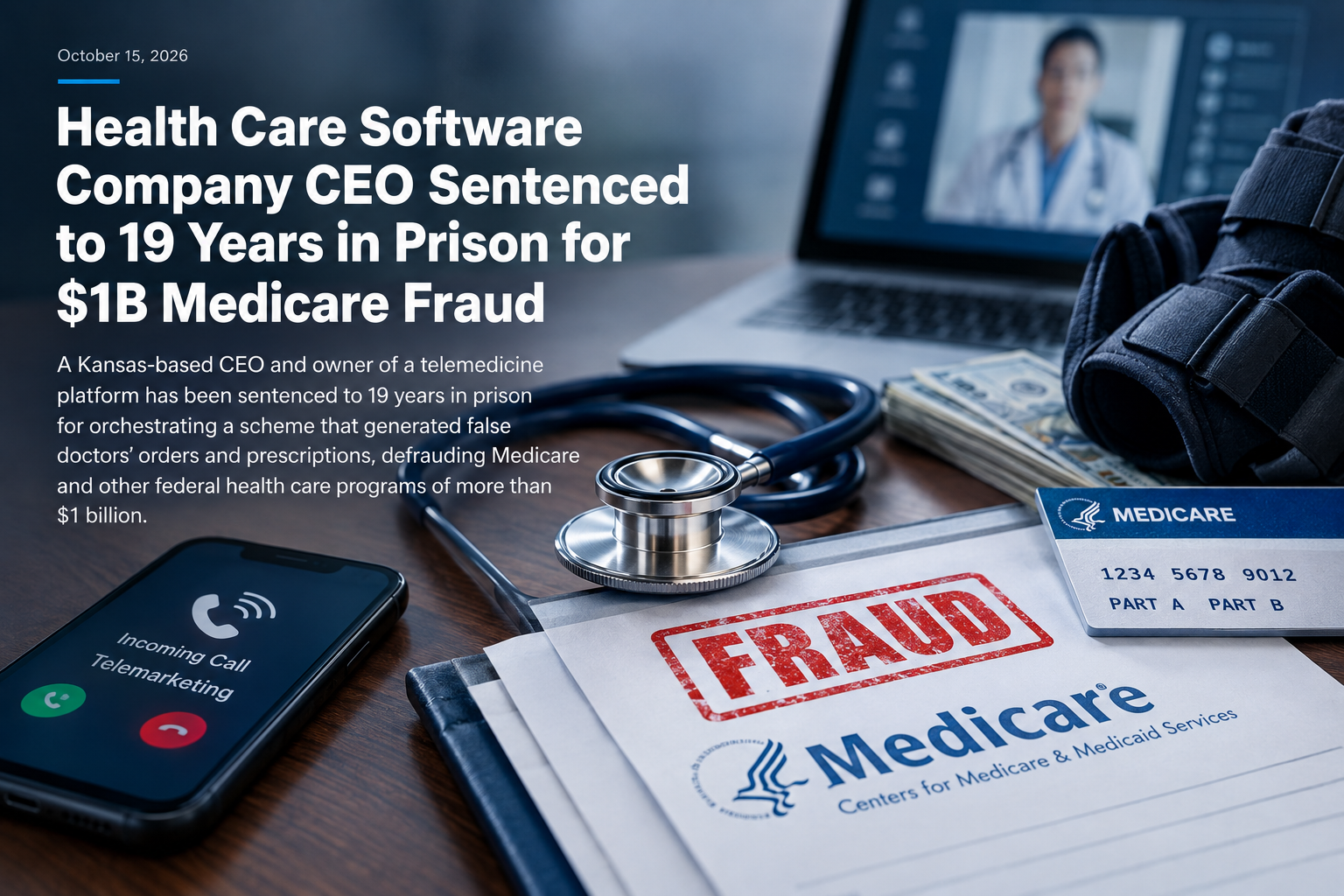
# Telemedicine CEO Sentenced to 19 Years Over $1 Billion Medicare Fraud Scheme
A Kansas healthcare technology executive has been sentenced to 19 years in prison for his role in a fraud scheme that generated more than $1 billion in claims against Medicare and other federal healthcare programmes. The case exposed how fraudulent medical orders, illegal kickbacks and deceptive telemedicine practices were used to exploit public healthcare funds.
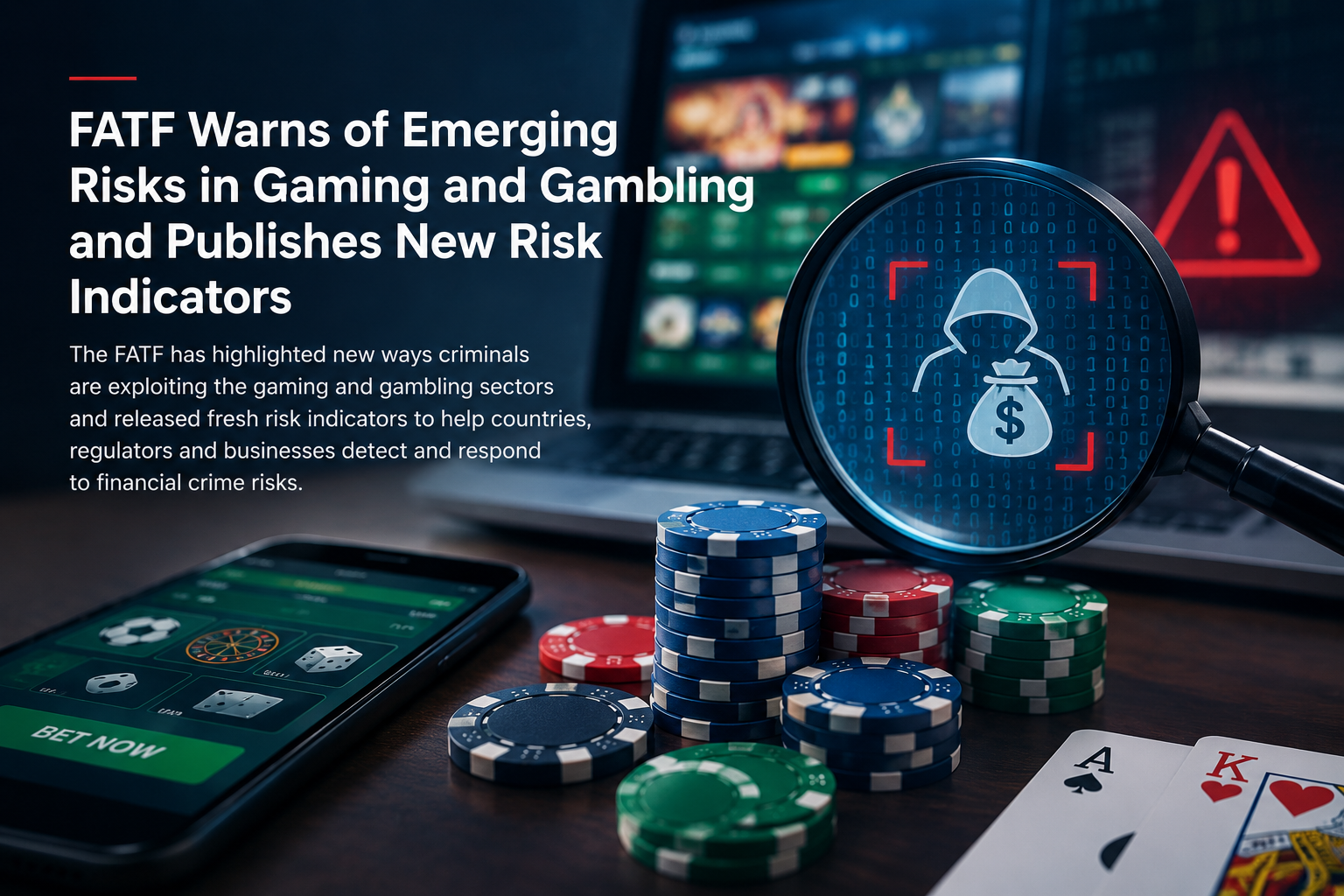
FATF Warns Gaming and Gambling Sectors Face Growing Financial Crime Risks
The Financial Action Task Force (FATF) has identified new ways criminals are exploiting gaming and gambling platforms to move money, evade controls and support wider criminal activity. With online and cross-border gambling expanding rapidly, the FATF has issued new risk indicators to help regulators, financial institutions and industry operators detect suspicious activity and respond to money laundering, terrorist financing and other financial crime risks.

Guns, Camouflage and Facebook: How Colombia’s ‘Narcoinfluencer’ Turned Crime Into Content
Nain Pérez, known online as Bendito Menor, built a huge following by mixing images of money, romance and armed life with a criminal persona. His rise shows how social media can turn organized crime into something dangerously close to celebrity culture.

ENISA Warns Digital Dependencies Are Expanding Europe’s Cyber Attack Surface
Europe’s growing reliance on interconnected digital technologies is creating new cybersecurity challenges, with ENISA warning that increasing digital dependencies could widen the region’s exposure to cyber threats, vulnerabilities and potential disruptions across critical sectors.

A network that laundered more than four million euros from scams by sending the money to Nigeria falls
Spanish Police Bust €4 Million International Money Laundering Ring Bound for Nigeria. The Spanish Civil Guard has dismantled a criminal network responsible for laundering over €4 million generated through cyber fraud, CEO scams, and identity theft across Europe. The organization utilized "smurfing"—splitting large illicit funds into more than 9,200 small-wire transfers using falsified passports and stolen identities—to bypass anti-money laundering controls and funnel cash into Nigeria. The two-phase operation led to 20 arrests, investigations into 11 others, and raids targeting key leaders in Bilbao as well as several complicit money transfer agencies.
No recommended articles found.