

UK Sustainability Reporting Standards Take Shape — What Boards Should Do Before the Rules Bite
Insight . Intelligence . Accountability
A new wave of professionals is transforming Governance, Risk, and Compliance from a rigid framework into a dynamic force for trust, innovation, and resilience. Governance, Risk, and Compliance (GRC) has long been associated with boardrooms and bureaucracy—a domain reserved for executives and auditors. But that image is changing fast.
UK Sustainability Reporting Standards Take Shape — What Boards Should Do Before the Rules Bite
GRC & Financial Crime Today Editorial Team
3 August 2026
The UK Sustainability Reporting Standards are moving from consultation to finalised text for voluntary use in 2026. The government has been explicit that mandatory application will follow — on a timetable it has deliberately left outside the standards themselves.
After exposure drafts of UK SRS S1 and S2 went through consultation in mid-2025, the UK government has confirmed the standards — its domestic adoption of the ISSB's IFRS S1 and S2 — are on track for finalisation and voluntary use in 2026. The standards will consolidate and build on existing obligations, including the Streamlined Energy and Carbon Reporting framework, TCFD-aligned climate disclosure, and the Energy Savings Opportunity Scheme, into a single ISSB-aligned baseline intended to keep UK reporting comparable with international markets.
What has drawn most attention from governance specialists is not the content of the standards themselves, but a procedural detail confirmed in a January 2026 letter from the Department for Business and Trade to the Financial Conduct Authority: the timing of any transitional relief, and the point at which reporting against UK SRS becomes mandatory for any category of company, will be set through Companies Act regulations or FCA rules — not embedded in the standards. In practice, that means finance and governance teams need to track two separate legislative tracks rather than one, and cannot assume that a company outside the initial mandatory scope has more time than it actually does.
The Direction Is Already Clear, Even Before Mandation
Several regulatory signals are moving in parallel with the UK SRS rollout, and together they describe a clear direction of travel. The FCA has published Good and Poor Practice guidance on sustainability disclosures that, in effect, asks firms to hold ESG data to the same standard of governance oversight and evidential rigour as financial reporting — a meaningful escalation from where market practice sits today. The FCA has also opened a consultation on bringing ESG ratings providers within its regulatory perimeter, aimed at improving methodological transparency and reducing conflicts of interest in a market that has, until now, operated with minimal oversight. And the FRC's UK Stewardship Code 2026, though voluntary, sets a higher bar for asset owners and managers on transparency and engagement — a bar that signatories will be expected to visibly meet.
ESG reporting is no longer a sustainability-team output. Regulators are treating it as a board-level governance obligation with the same evidential expectations as financial statements.
What This Means in Practice
For UK boards and their audit and risk committees, the sensible response is to stop waiting for the mandatory scope date before treating ESG disclosure with financial-reporting-grade rigour. That means mapping current ESG data collection and disclosure processes against the UK SRS S1 and S2 structure now, closing the more obvious data governance gaps — provenance, version control, audit trail — well ahead of any external assurance requirement, and assigning explicit board-level accountability for sustainability disclosure rather than leaving it as a sustainability-team output that gets bolted onto the annual report. Institutions that treat this as a compliance deadline to be met at the last responsible moment will find themselves assembling an evidence base retrospectively, under time pressure, for a regulator that has been signalling its expectations for well over a year.
Sources: UK Government and FCA publications on UK Sustainability Reporting Standards, 2025–2026; FRC Stewardship Code 2026. This article is intended as general commercial awareness and does not constitute regulatory or legal advice.
Your email address will not be published. Required fields are marked with *
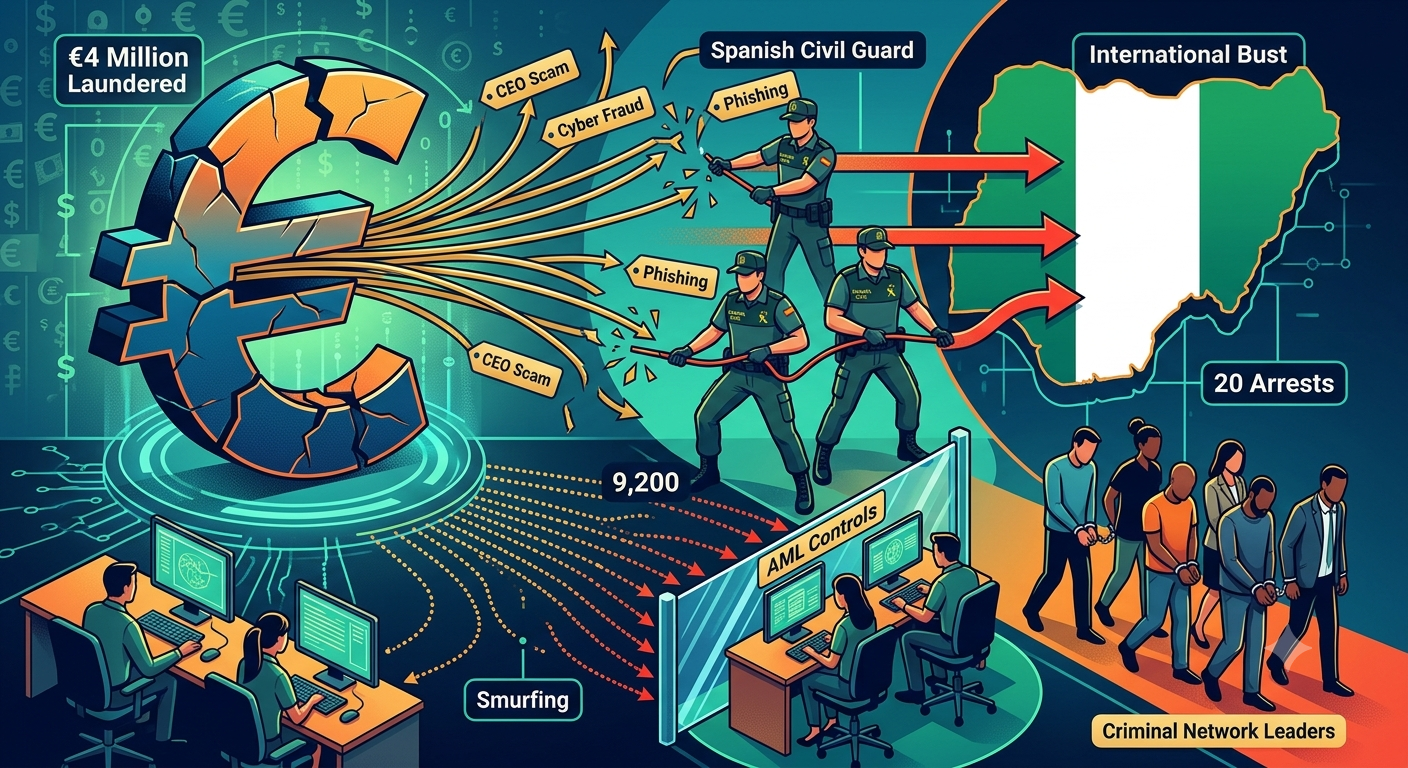
A network that laundered more than four million euros from scams by sending the money to Nigeria falls
Spanish Police Bust €4 Million International Money Laundering Ring Bound for Nigeria. The Spanish Civil Guard has dismantled a criminal network responsible for laundering over €4 million generated through cyber fraud, CEO scams, and identity theft across Europe. The organization utilized "smurfing"—splitting large illicit funds into more than 9,200 small-wire transfers using falsified passports and stolen identities—to bypass anti-money laundering controls and funnel cash into Nigeria. The two-phase operation led to 20 arrests, investigations into 11 others, and raids targeting key leaders in Bilbao as well as several complicit money transfer agencies.

U.S. Regulators Hit UBS With $173 Million in Coordinated AML Enforcement Action
Eight years after promising regulators it would fix persistent weaknesses in its anti-money laundering controls, UBS is paying for what those regulators say it failed to finish.
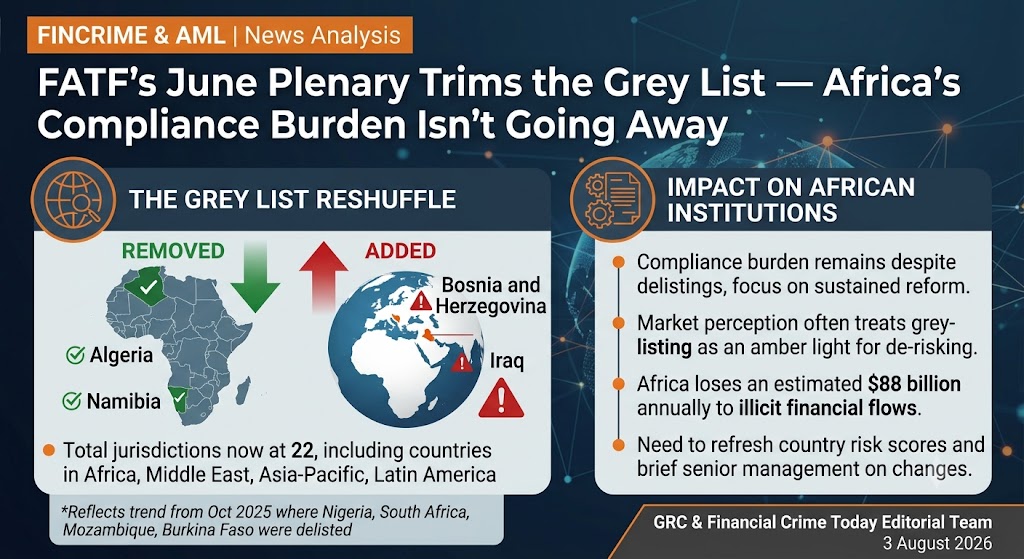
FATF's June Plenary Trims the Grey List — Africa's Compliance Burden Isn't Going Away
The Financial Action Task Force closed its June 2026 plenary by removing Algeria and Namibia from its list of jurisdictions under increased monitoring, while adding Bosnia and Herzegovina and Iraq. For African compliance functions, the headline delisting matters less than what it confirms about the direction of travel.

RegTech Won't Save You From a Bad Governance Model. It Will Just Automate It Faster.
Every compliance leader I meet is being asked, in some form, what their AI strategy is. Almost none of them are being asked the more important question first: what is your governance model for the AI you already have?
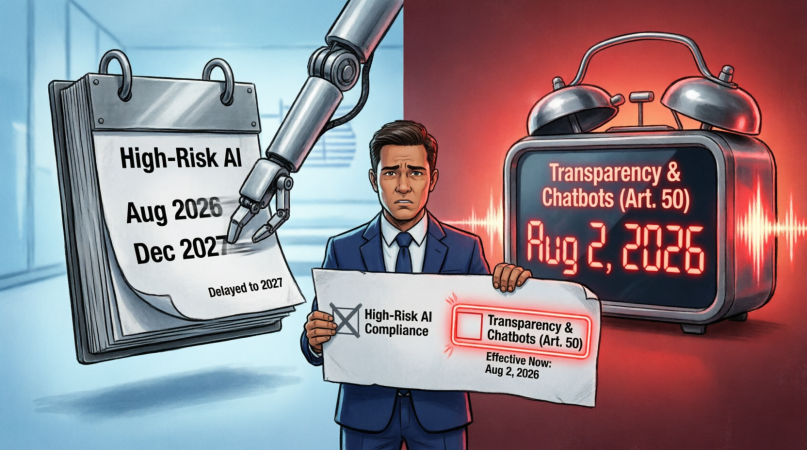
The EU AI Act's August Deadline Arrives — Just Not the One Everyone Expected
High-risk AI obligations for financial services have been pushed back sixteen months. Transparency rules for chatbots and synthetic media have not moved at all — and enforcement power against general-purpose AI providers switches on this week.

Third-Party Risk Is a Board Issue Now, Not a Procurement Checklist
Outsourcing does not outsource accountability. Regulators have said this for years. Boards are only now starting to act as though they believe it.
No recommended articles found.